Feast of the Seven Fishes — Italian Christmas Eve
Seven fish dishes, one table, no meat: the Italian Christmas Eve menu explained — where la Vigilia comes from, why seven, and how to cook the whole dinner without losing the kitchen.
Mediterranean Flavors
Mediterranean Cooking Expert
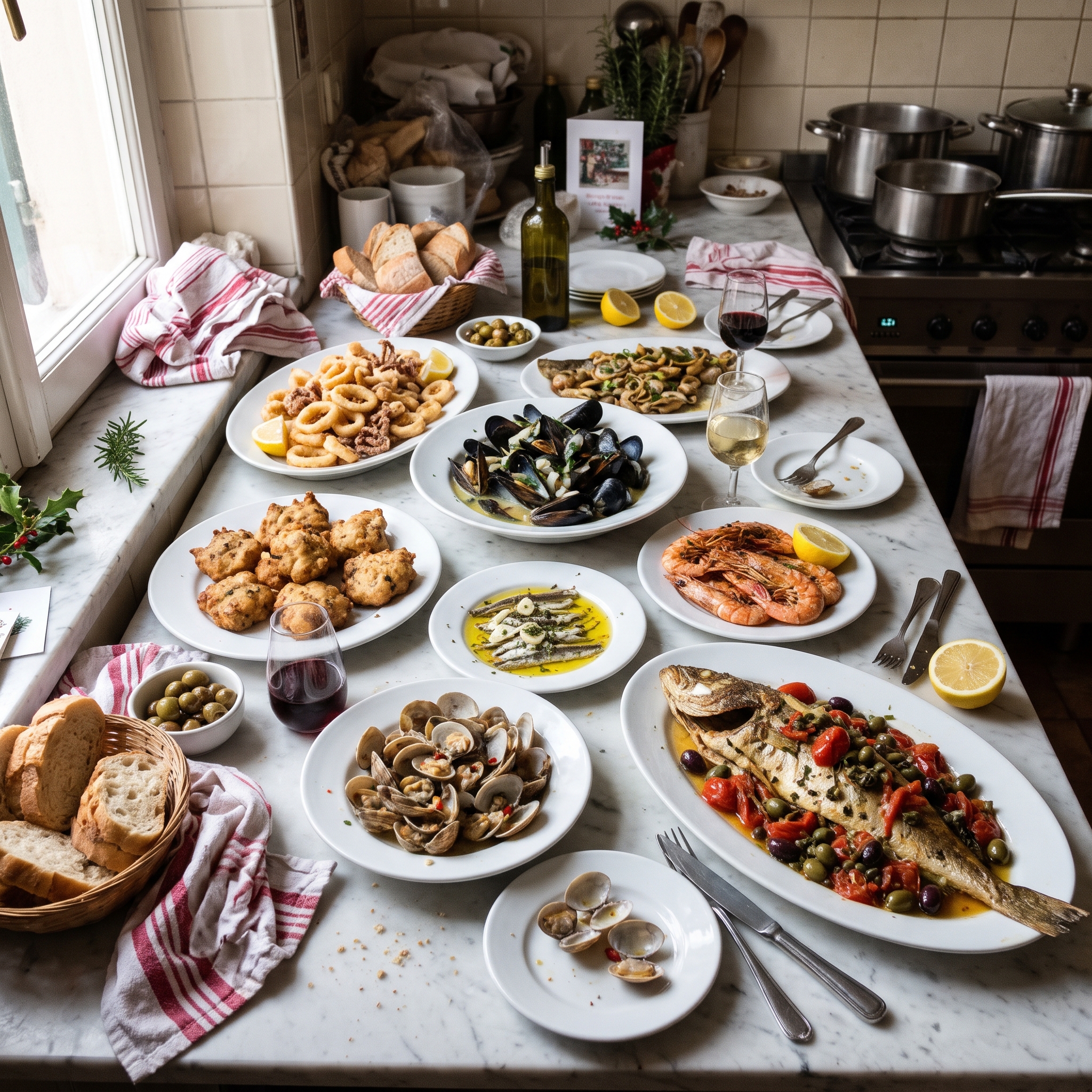
Every 24 December, Italian families sit down to a table with no meat on it and — by tradition — seven different fish dishes. The Feast of the Seven Fishes, la Vigilia, is the most Italian of all Christmas rituals and, surprisingly, one of the youngest: it is a nineteenth-century custom that took its present shape in the kitchens of southern Italy and was then carried across the Atlantic by immigrants from Naples and Sicily. The "seven fishes" as a fixed formula is largely an Italian-American codification of a much looser family habit.
Why fish, and why seven
The reason for fish is liturgical, not culinary. Christmas Eve was a day of fasting and abstinence from meat, so the table was built from what the sea and the garden gave: fish, vegetables, legumes, olive oil, bread. The number seven came later, and the explanations compete — the seven sacraments, the seven hills of Rome, the seven days of creation. In practice, families count as they please: nine in parts of Puglia, eleven or thirteen in others, thirteen for the twelve apostles and Christ at the centre. The constant is not the exact number but the odd count and the abundance behind it. Fewer dishes, well cooked, is closer to the spirit than seven tired ones.
How the meal is structured
There are no courses in the restaurant sense. Dishes arrive as they are finished and stay on the table: cold seafood first, then a pasta, then the baked centrepiece, then the fried items, then sweets. It is a long table, not a plated dinner, and it starts late — usually after the evening Mass, ending close to midnight.
The seven dishes
1. Baccalà. Salt cod, soaked for 24 to 48 hours with several water changes, then either fried in a light batter or stewed with tomatoes, olives and pine nuts. It is the anchor of the southern table and the dish that most rewards patience: the soaking, not the cooking, decides the result.
2. Insalata di mare. A cold seafood salad of octopus, squid, prawns and mussels, dressed only with olive oil, lemon and parsley. It is made in the morning, which is precisely why it belongs on a Christmas Eve menu.
3. Spaghetti alle vongole. Clams opened in a covered pan with garlic, white wine and a little chilli, then tossed with the pasta and its cooking water. The pasta of the evening, and the one everyone remembers.
4. Linguine con le alici. Anchovies melted slowly into warm oil and garlic until they dissolve into the sauce. The cheapest dish on the table and often the best — the one that shows whether the cook understands salt.
5. Gamberi al limone. Prawns seared briefly in olive oil, finished off the heat with lemon and parsley. Two minutes, no more: this is the dish that goes rubbery when the cook is distracted.
6. Calamari fritti. Squid rings in a dry flour or semolina coating, fried hot and fast, salted the second they come out. Fried in batches, never piled up in the pan.
7. Capitone. Eel, the Roman and Lazio centrepiece, roasted or fried in pieces. It is the dish that divides Italy — many families keep it, many have replaced it with a second baked fish such as sea bream or monkfish.
To finish: struffoli, small dough balls fried and bound with honey and citrus zest, torrone, and panettone. Italian Christmas Eve is one of the few holiday tables in Europe that a cardiologist would recognise as a Mediterranean diet: fish, olive oil, vegetables, legumes, almost no meat, and sweets kept for the end.
Cooking it at home
Build the seven around method, not around species: two cold dishes, one pasta, one baked centrepiece, two fried, one braised. Anything cold is done in the morning; anything fried is done at the last minute, in batches, in oil that is genuinely hot. Count 150 to 200 g of fish per person across the whole menu — the table looks generous because there are many dishes, not because each one is large. And keep the salt honest: baccalà and clams are already salty, so season the rest lightly and let the lemon do the work.
Related Articles
The 13 Desserts of Provence — A Complete Guide
Three white cloths, thirteen sweets and a Christmas Eve supper without meat: the Provençal table explained — where the number came from, what each sweet stands for, and how to build one at home.
Read More →Mediterranean meal prep: 5 days of lunches
The Mediterranean diet does not ask for advanced technique — it asks for logistics. The secret to eating well every day is not complicated recipes; it is a two-hour Sunday session:
Read More →Get More Cooking Tips
Join our community and get weekly Mediterranean cooking tips delivered to your inbox.